


Commercial Grease Trap Maintenance Requirements for Restaurants


Table of Contents
- What Is a Grease Trap and Why Restaurants Need One
- How Grease Traps Work: Understanding FOG Separation
- Grease Trap Cleaning Frequency: Meeting the 25% Rule
- Commercial Grease Trap Inspection Checklist for Health Compliance
- Maintaining Your Grease Interceptor Maintenance Log
- Legal Compliance and Consequences of Neglecting Maintenance
- Signs Your Grease Trap Needs Immediate Attention
- Frequently Asked Questions
Last Updated: September 27, 2026
What Is a Grease Trap and Why Restaurants Need One
A grease trap is a plumbing device designed to intercept fats, oils, and grease (FOG) before they enter the municipal sewer system. Commercial grease trap maintenance requirements for restaurants are not optional, they’re a legal mandate that protects both your business and public infrastructure.
When FOG enters sewer lines, it solidifies as it cools, creating blockages that cost municipalities thousands to repair. Neglecting grease trap maintenance requirements results in regulatory fines, operational shutdowns, and emergency plumbing calls.
The grease trap sits between your kitchen drainage system and the municipal sewer connection, capturing grease and solid waste while allowing relatively clean effluent to flow downstream.
Most restaurant owners don’t realize that their local health department conducts surprise inspections specifically looking for grease trap compliance. A single violation can trigger mandatory remediation and documented follow-ups.
How Grease Traps Work: Understanding FOG Separation
Grease traps operate on density separation: as wastewater enters and cools, FOG floats to the surface and solidifies while heavier solids settle as sludge. Relatively clean water exits through an outlet pipe.
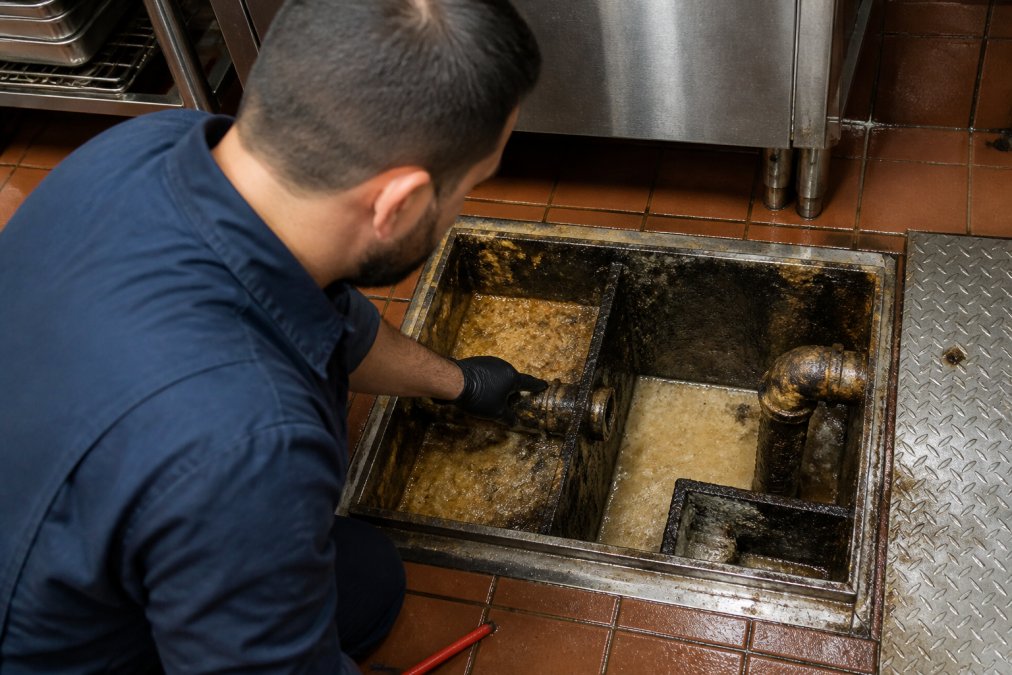
Internal baffle walls force wastewater to move slowly, giving FOG time to separate before reaching the outlet pipe. Most systems include both a grease trap (handling immediate drainage from sinks and dishwashers) and a larger grease interceptor (handling overall system load).
When a trap isn’t cleaned regularly, accumulated grease and sludge reduce capacity, allowing water to bypass without adequate separation time and FOG to reach the sewer line, defeating the system’s purpose.
The baffle wall design is what makes separation work. When grease accumulates around the baffle, separation efficiency drops dramatically, sometimes to nearly zero within weeks of the last cleaning.
Grease Trap Cleaning Frequency: Meeting the 25% Rule
The industry standard for commercial grease trap maintenance requirements is known as the 25% rule: your trap should be pumped when grease and sludge accumulation reaches 25% of the tank’s total volume. This is not a suggestion, it’s a regulatory requirement in most jurisdictions.
Frequency depends on trap size, kitchen volume, and food types. A busy steakhouse might need pumping every two weeks; a quick-service restaurant might go six weeks between cleanings.
Key factors: tank size, daily wastewater volume, cooking types (frying, grilling, sautéing generate different FOG volumes), and meals served per day. Most restaurants need monthly or bi-weekly cleaning. Have a professional waste hauler assess your system and recommend a service schedule.
Waiting until your trap overflows is the most expensive mistake a restaurant can make. Emergency pumping costs significantly more than routine service, and you risk sewer line damage that requires excavation and replacement.
Commercial Grease Trap Inspection Checklist for Health Compliance
Health inspectors evaluate grease trap systems during routine visits. A documented inspection checklist ensures compliance and demonstrates commitment to regulations.
Your commercial grease trap inspection checklist should include:
- Trap is accessible for cleaning and inspection
- No visible grease or debris around the trap exterior
- Inlet and outlet pipes are clear and properly connected
- Baffle walls are intact and functioning
- Grease cap is secure and in good condition
- No odors indicating decomposition or blockage
- Service records are current and documented
- Trap size matches kitchen volume (verify against original specifications)
- No cracks or structural damage to the tank
- Effluent flowing from outlet pipe is relatively clear (not gray or oily)
This checklist serves dual purposes: it helps your staff understand what to monitor, and it creates documentation that demonstrates your commitment to compliance. During a health inspection, having this log available shows the inspector that you take maintenance seriously.
Restaurants with 3-5 kitchen stations and moderate daily volume should conduct this checklist monthly. High-volume establishments should inspect weekly.
Maintaining Your Grease Interceptor Maintenance Log
A maintenance log is your primary defense against regulatory violations and emergency failures, proving active management and compliance with local wastewater discharge permit requirements.
Your maintenance log should record:
- Date of service
- Type of service performed (pumping, inspection, repairs)
- Waste hauler name and certification number
- Volume of grease and sludge removed
- Any issues identified or repairs completed
- Technician name and signature
- Next scheduled service date
The log becomes compliance documentation. If a health inspector asks when your trap was last serviced, you have immediate proof. If facing regulatory action, the log demonstrates good-faith maintenance efforts.
Keep logs in a three-ring binder near the trap or maintain digital records.
Store your maintenance log where kitchen staff can easily access it. When new employees start, they should understand why grease trap maintenance matters and where to find the service history.
Legal Compliance and Consequences of Neglecting Maintenance
Grease trap maintenance requirements are legal obligations embedded in multiple regulatory frameworks. The Clean Water Act establishes the federal baseline, while the EPA delegates enforcement to state and local authorities. Your restaurant must comply with municipal codes, state environmental regulations, health department rules, and local pretreatment programs.
The Chain of Custody for Grease Waste
Common Regulatory Violations
Violations fall into two categories: operational and documentation.
Penalties and Enforcement
Environmental Liability
A single violation on your health inspection creates a permanent paper trail. Future inspectors will reference the documented violation and increase scrutiny on subsequent visits. Repeat violations can result in permit revocation and operational shutdown orders.
Best Practice: Pretreatment Program Enrollment
Signs Your Grease Trap Needs Immediate Attention
Immediate Warning Signs
- Backed-up sinks or slow drains in the kitchen: This indicates the trap is full, blocked, or experiencing baffle failure. Water should drain from kitchen sinks within 5-10 seconds under normal conditions. If drainage takes 30+ seconds or water pools in the sink, the trap is likely at or beyond capacity.
- Foul odors around the trap area: Decomposing grease and sludge produce strong, sulfurous smells. If the odor is noticeable more than 5 feet from the trap, it suggests significant accumulation or a structural breach allowing gases to escape.
- Grease or sewage pooling around the trap exterior: This is a sign of overflow or structural failure. Pooling indicates the trap has exceeded capacity and is releasing waste into the surrounding area, creating an environmental hazard and a health code violation.
- Gurgling sounds from drains: This indicates pressure buildup in the system caused by blockage. Gurgling typically occurs when water is forced around an obstruction, creating air pockets that produce audible sounds.
- Visible grease in the grease cap area or around the trap lid: The trap is at or beyond the 25% capacity threshold. If grease is visible on the surface, internal accumulation is severe.
- Plumbing backups affecting multiple fixtures: When multiple drains back up simultaneously (kitchen sink, floor drain, toilet), the blockage is likely downstream of the trap, in the sewer line itself. This suggests FOG has escaped the trap and solidified in the municipal line.
- Sewage smell inside the kitchen: If the kitchen smells like raw sewage rather than just stale grease, the trap may have a cracked baffle or structural damage allowing untreated wastewater to bypass the system.
If you notice warning signs, follow this protocol:
Step 1: Stop using the kitchen immediately to prevent worsening blockage.
Common Trap Failures and Their Causes
Prevention: Extending Time Between Failures
Do not attempt to use chemical drain cleaners or enzymatic treatments to clear a blocked grease trap. These products can damage the trap’s internal structure, interfere with professional pumping equipment, and create hazardous chemical reactions. Always call a professional.
Frequently Asked Questions
How often should a restaurant grease trap be serviced?
Restaurants must pump their grease traps when they reach 25% capacity of solids and grease combined, this is the regulatory threshold. For most high-volume kitchens, this means pumping every 1-3 months. Cleaning frequency depends on your kitchen’s daily output, the trap’s size, and local municipal codes. Many health departments require documented service logs showing compliance. Contact your local health department or a professional waste hauler to determine the right schedule for your operation.
What is the 25% rule for grease interceptors?
The 25% rule requires that grease traps be pumped when the combined depth of grease and solids reaches 25% of the trap’s total depth. This prevents overflow into the sewer system and sanitary sewer overflows that damage municipal infrastructure. Failing to follow this rule violates EPA guidelines and local municipal codes, resulting in fines and potential closure. Professional pumping services measure the accumulation and document compliance on your service log.
Is a grease trap required for a restaurant?
Yes. Federal EPA regulations and local municipal codes require commercial kitchens to install grease traps or grease interceptors to prevent fats, oils, and grease (FOG) from entering the public sewer system. Restaurants without compliant grease trap systems face regulatory fines, environmental penalties, and closure. Your local health department and wastewater authority enforce these requirements during plumbing inspections and health inspections.
What are the consequences of failing a grease trap inspection?
Failing a grease trap inspection can result in operational shutdowns, regulatory fines ranging from hundreds to thousands of dollars, mandatory remediation orders, and damage to your business reputation. Repeated violations may lead to loss of your food service license. Health departments document violations in compliance records, which affect future permits and inspections. Professional pumping and maintenance prevent these costly outcomes.
Who is responsible for cleaning the grease trap?
The property owner or operator of the commercial kitchen is responsible for grease trap maintenance and cleaning. In leased spaces, responsibility depends on the lease agreement, some landlords assume it, others require tenants to arrange and pay for service. Either way, the business operating the kitchen is liable for regulatory compliance. A professional waste hauler should handle pumping and hydro-jetting to ensure proper disposal and documentation.
What should be included in a grease interceptor maintenance log?
A maintenance log must document the date of service, the amount of grease and solids removed (in gallons or pounds), the depth of accumulation before pumping, the service provider’s name and license, and confirmation that waste was disposed of properly. Your log proves compliance during health inspections and protects you from regulatory penalties. Keep records for at least three years and make them available to inspectors on request.