


Hydro Jetting vs Snaking Drains: Which to Choose


Table of Contents
- How Hydro Jetting and Drain Snaking Work
- Hydro Jetting vs Snaking Drains: Side-by-Side Comparison
- The Cost of Hydro Jetting vs Snaking
- Signs of a Main Sewer Line Backup
- Pipe Material Compatibility: Which Method Is Safe for Your Pipes?
- Preventative Drain Maintenance Tips
- When to Call a Professional for Drain Cleaning
- Frequently Asked Questions
Last Updated: September 28, 2026
How Hydro Jetting and Drain Snaking Work
When a drain clogs, the choice between hydro jetting vs snaking drains comes down to what is blocking the pipe. Snaking uses a rotating steel cable to break through or pull out an obstruction; hydro jetting uses high-pressure water to scour the pipe’s entire interior.
At Cape Plumbing, Inc., we run into this decision almost daily, and neither method wins every time. The right pick depends on clog severity, pipe material, and whether the problem is one-time or recurring.
EPA guidance on sanitary sewer overflows
What Drain Snaking Does
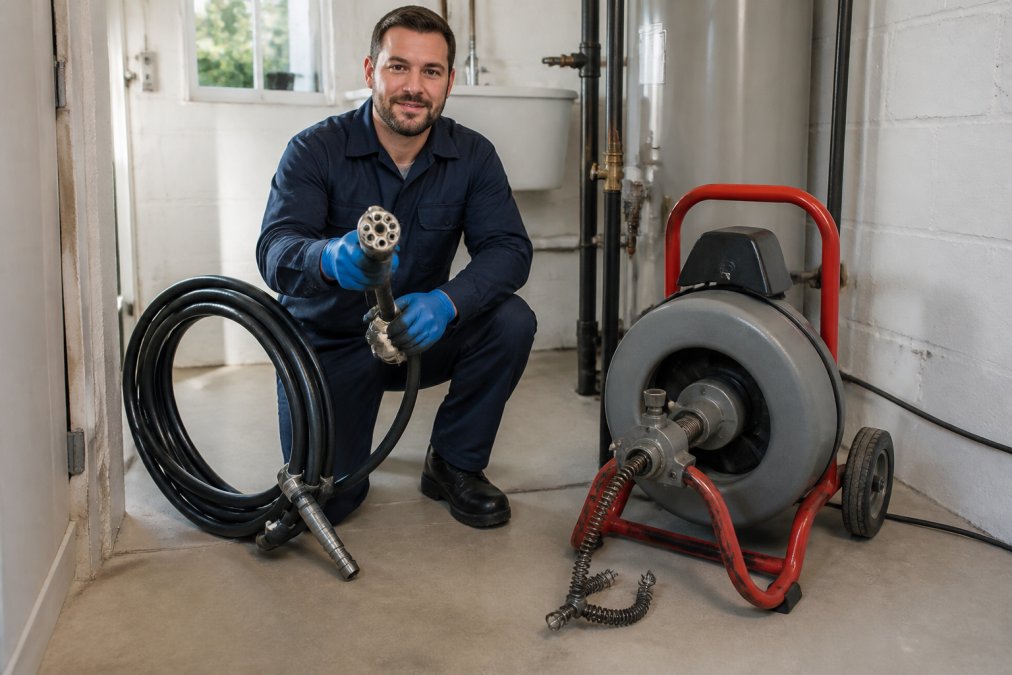
Drain snaking feeds a flexible steel cable, often called a plumbing snake or auger, into a drain to break up or retrieve a blockage. The rotating cutting head punches through soft clogs or snags debris and pulls it back out.
It is fast, targeted, and gentle on older pipes, and a plumber can usually clear a simple, shallow blockage in one visit. It does not clean pipe walls, though, so grease, scale, and biofilm stay behind and snaked lines tend to clog again sooner.
What Hydro Jetting Does
Hydro jetting uses high-pressure water, often through a specialized hydro-jetting nozzle, to scour the full interior diameter of a pipe. The streams wash away grease buildup, tree roots, and cast iron scale rather than just poking a hole through them.
The result is closer to full pipe-wall restoration than a simple clearing, which is why hydro jetting is the better long-term answer for recurring clogs, but it requires the right equipment and knowledge of what your pipes can handle.
Hydro Jetting vs Snaking Drains: Side-by-Side Comparison
The short version: snaking clears a path, hydro jetting cleans the pipe. If your drain clogs once and clears easily, snaking is usually enough. If the same line backs up every few months, hydro jetting addresses the buildup causing the pattern.
| Factor | Drain Snaking | Hydro Jetting |
|---|---|---|
| Method | Mechanical cable and cutting head | High-pressure water |
| Best for | Simple, isolated clogs | Grease, roots, recurring clogs |
| Pipe wall cleaning | No | Yes, full scouring |
| Pipe material risk | Lower on fragile pipes | Needs compatible piping |
| Typical cost | Lower | Higher |
| Long-term result | Clog often returns | Cleaner, longer-lasting |
Snaking wins on cost and caution; hydro jetting wins on thoroughness and prevention. What most guides miss is that the “right” answer is often two steps: snake first to open a path, then jet to clean the line properly.
Snaking and hydro jetting are not competitors so much as stages. Many pros open a blocked line with a snake, then follow with hydro jetting to remove the buildup that caused the blockage in the first place.
The Cost of Hydro Jetting vs Snaking
Hydro jetting generally costs more than snaking, reflecting the equipment, time, and skill each method requires. Snaking is quicker and uses simpler tools. Hydro jetting needs a high-pressure pump, the right nozzle for the clog type, and a technician who knows which pressure settings are safe for your pipes.
What actually drives the price on either job:
- Access point. A cleanout near the street is a quick setup; a drain under a slab or a long commercial line takes more time, hose, and sometimes a second technician.
- Line length and diameter. A 2-inch kitchen branch clears faster than a 4-inch main sewer lateral. Commercial lines can run several hundred feet.
- Clog type. Soft grease and soap scum clear quickly. Tree roots, cast iron scale, and hardened fat require more passes with either method.
- Camera inspection. Most reputable plumbers run a camera before and after, adding time but preventing guesswork and confirming the pipe survived.
- Follow-up. A snaking job that only opens a path often needs a return visit. A hydro jetting job that scours the full pipe wall usually does not.
A cheaper snaking job that fails in three months is not actually cheaper.
Ask any plumber whether a camera inspection is included before the cleaning. Running a camera first tells you the clog type and pipe condition, which is the difference between guessing and choosing the right method.
The Long-Term Cost-Benefit Math
Most guides compare the two methods on sticker price alone, which is the wrong frame. The real comparison is cost per year of clear pipe, not per visit.
A simple way to think about it:
- One-time, isolated clog in a sound pipe. Snaking wins: lower cost, fast result.
- Recurring clog in the same line. Hydro jetting wins: the buildup causing the pattern gets removed, not just punched through.
- Older pipe with known scale or root intrusion. Hydro jetting plus a camera inspection wins if the pipe is structurally sound. If not, snaking may be the safer temporary fix until the line is repaired or replaced.
- Commercial kitchen or high-use line. Hydro jetting on a maintenance schedule usually beats emergency snaking calls, because grease never hardens into a full blockage.
Signs of a Main Sewer Line Backup
A main sewer line backup is a blockage in the pipe carrying waste from your whole property to the municipal sewer, and it behaves differently from a single-fixture clog. The clearest sign is multiple drains misbehaving at once: a toilet gurgles when you run the sink, or water backs up in the tub when the washing machine drains.
Watch for these signals:
- Several drains draining slowly at the same time
- Sewage odor coming from drains or the yard
- Gurgling sounds from toilets or floor drains
- Water pooling around the floor drain or cleanout
- Wastewater backing up into the lowest fixture in the building
Pipe Material Compatibility: Which Method Is Safe for Your Pipes?
Pipe material decides which method is safe, and generic advice often falls short. Hydro jetting sends high-pressure water through the line, which older or fragile pipes may not tolerate. Snaking is more forgiving, but a stiff cable can still damage a failing pipe.
Here is a practical way to think about it:
- Cast iron: Common in older homes. Scale builds up over decades, narrowing the pipe and creating a rough surface that catches grease and waste. Hydro jetting removes that scale and restores flow, but very corroded sections need a camera inspection first to check wall thickness.
- Clay or Orangeburg: Found in aging sewer laterals. Clay is brittle and jointed; Orangeburg is tar-paper based and deforms over time. Both are fragile. Snaking is often safer until a camera confirms condition, and even then low-pressure jetting may be the only safe option. High pressure risks a collapse.
- PVC and ABS: Modern plastic piping handles hydro jetting well at the correct pressure. These smooth materials, jointed with solvent cement or rubber gaskets, resist both mechanical and hydraulic cleaning when installed correctly.
- Lead and galvanized steel: Found in very old waste lines. Lead is soft and deforms easily; galvanized steel corrodes from the inside and can be paper-thin by the time it clogs. Both need a camera inspection before any cleaning method is chosen.
- PEX and copper supply lines: Not relevant to drain cleaning, but worth noting that drain methods apply to waste lines, not supply piping.
Running high-pressure hydro jetting through a badly corroded or cracked pipe can turn a clog into a collapsed line. Always confirm pipe condition with a camera before jetting older plumbing.
How a Technician Actually Decides
The decision is material plus condition plus clog type. A sound cast iron pipe with grease buildup is a good hydro jetting candidate; the same pipe with visible corrosion and a hairline crack is not. A clay lateral with root intrusion may need snaking first, then a camera to assess damage, then a call on whether jetting is safe or the line needs repair.
Preventative Drain Maintenance Tips
Preventative drain maintenance is the cheapest way to avoid both snaking and hydro jetting. Most clogs build slowly, and a few habits keep lines flowing:
- Never pour cooking grease down any drain
- Run hot water for 30 seconds after each kitchen use
- Use drain screens to catch hair and food particles
- Flush lines monthly with hot water and a mild cleaning solution
- Schedule a professional inspection every 12 to 18 months for older homes
- Address slow drains early, before they become full blockages
When to Call a Professional for Drain Cleaning
Call a professional when a drain backs up repeatedly, when multiple fixtures are affected, or when you smell sewage. Those signs point to a main line problem store-bought cleaners will not fix, and some chemical cleaners can damage pipes further.
CDC guidance on sewage exposure and health risks
Frequently Asked Questions
How much does it cost to hydro jet a sewer line?
The cost of hydro jetting depends on the severity of the clog, pipe diameter, and accessibility. Because hydro jetting uses specialized high-pressure equipment, it generally costs more than mechanical snaking. For an accurate quote, contact a licensed plumber who can inspect your line first. Many companies offer free estimates, so you can compare options without commitment.
Is hydro jetting safe for older or damaged pipes?
Hydro jetting is safe for most pipes when a professional first inspects the line with a camera. It is not recommended for pipes with existing cracks, holes, or severe corrosion, as high-pressure water can worsen damage. A plumber can adjust water pressure and choose the right nozzle for your pipe material. If your pipes are fragile, snaking may be the safer choice.
Can hydro jetting remove tree roots from sewer lines?
Yes, hydro jetting effectively removes tree roots that have intruded into sewer lines. The high-pressure water scours the pipe walls, cutting through roots and flushing debris away. For severe root intrusion, a plumber may use a root-cutting nozzle. After clearing, a camera inspection confirms the line is clean and helps prevent recurring clogs.
What is the difference between a drain snake and a hydro jet?
A drain snake is a mechanical tool that uses a rotating cable to break through or pull out clogs. A hydro jet uses high-pressure water to scour the entire pipe interior, removing buildup from walls. Snaking is better for simple blockages, while hydro jetting provides a deeper clean and is ideal for grease, roots, and recurring clogs.