


Water Heater Replacement Cost Breakdown: 2026 Guide


Table of Contents
- Why Quotes for Water Heater Replacement Vary So Much
- Average Water Heater Installation Labor Cost in 2026
- Tankless vs Tank Water Heater Cost Comparison
- Water Heater Permit and Inspection Fees Explained
- Hidden Costs: Retrofitting, Disposal, and Code Upgrades
- Tax Credits and Rebates That Lower Your Water Heater Replacement Cost
- How to Read a Water Heater Replacement Quote Without Getting Ripped Off
- Conclusion
- Frequently Asked Questions
Last Updated: September 25, 2026
Why Quotes for Water Heater Replacement Vary So Much
A water heater replacement cost breakdown varies because three numbers drive almost every quote: the unit itself, the installation labor, and the code upgrades your home requires. Two identical homes on the same street can receive quotes hundreds of dollars apart for reasons that have nothing to do with the contractor’s honesty.
This guide from Cape Plumbing, Inc. explains what actually belongs in a fair quote, so you can compare bids line by line instead of guessing. Our team has handled residential and commercial plumbing work for more than 15 years, and the pattern is consistent: homeowners rarely get ripped off by the unit price. They get surprised by the line items nobody mentioned up front.
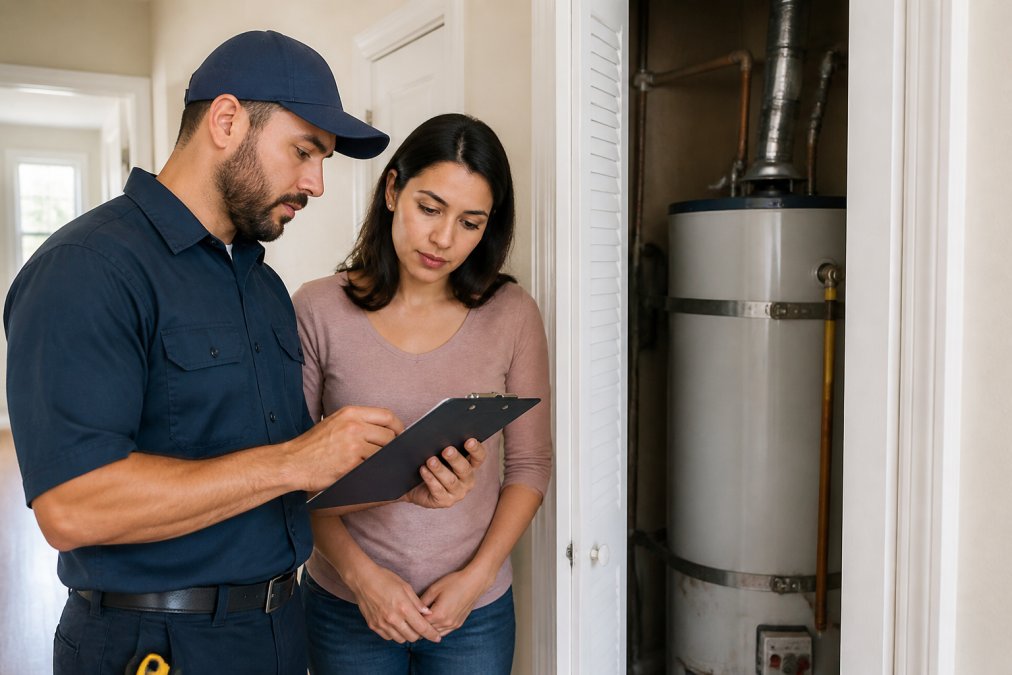
Here is what most guides miss. The tank is the easy part to price. The variables that move your total are access, venting, and whether your existing setup meets current plumbing code.
The most common mistake is comparing only the bottom-line number on each bid. A lower quote that excludes permit fees, a thermal expansion tank, or disposal almost always grows once work begins. Ask every contractor what is not included before you sign.
Average Water Heater Installation Labor Cost in 2026
Installation labor is typically the second-largest line on your quote, and it depends on how much work the swap actually requires. A straightforward like-for-like replacement takes far less time than a conversion that needs new venting, a gas line upgrade, or added electrical panel capacity.
Most quotes you receive will separate the unit cost from the installation labor, and you should insist they do. That separation is what lets you compare bids fairly. When a contractor bundles everything into one figure, you cannot tell whether you are paying more for the equipment or for the work.
A few factors that push labor higher:
- Access: Tight utility closets, attics, and crawl spaces add time.
- Fuel type changes: Switching from gas to electric, or the reverse, requires new connections.
- Venting: Older homes often need updated venting to meet current requirements.
- Code compliance: Shut-off valves, a water pressure regulator, or a code inspection can add scope.
Because pricing depends on your home’s specific configuration, the honest answer is that no single number applies to every job. Cape Plumbing, Inc. provides fast, no-obligation estimates so you see the real figure for your setup rather than a national average that may not fit.
Tankless vs Tank Water Heater Cost Comparison
The tankless versus tank decision comes down to upfront cost against long-term efficiency, but the upfront cost is where most budgets go wrong.
| Factor | Conventional Tank | Tankless |
|---|---|---|
| Upfront unit cost | Lower | Higher |
| Installation complexity | Simpler swap | Often needs upgrades |
| Gas line upgrade | Rarely required | Frequently required |
| Electrical panel upgrade | Rarely required | Sometimes required (electric tankless) |
| Venting requirements | Standard atmospheric vent | May need stainless steel or PVC venting |
| Condensate management | Not applicable | Required on condensing units |
| Lifespan | Shorter | Longer |
| Energy efficiency | Standby losses | On-demand heating |
Before committing to tankless, ask the contractor to measure your gas line capacity and BTU requirements first, and to confirm the venting material and condensate route in writing. If the existing line is undersized or the venting needs to change, that upgrade belongs in the quote from day one, not as a change order later.
When a tank still wins. If your existing tank setup is code-compliant, your gas line is adequately sized, and you are not planning to stay in the home long enough to recoup the efficiency difference, a conventional tank is the simpler, cheaper path. The efficiency savings from tankless are real but gradual; they do not erase a retrofit that costs as much as the unit.
Water Heater Permit and Inspection Fees Explained
Permit and inspection fees are separate from labor, and they are non-negotiable in most jurisdictions. A water heater replacement is a permitted plumbing job, and the fee covers the code inspection that confirms the installation is safe and compliant.
Ask two questions of every contractor:
- Is the permit fee included in this quote?
- Who pulls the permit, you or me?
Hidden Costs: Retrofitting, Disposal, and Code Upgrades
- A thermal expansion tank, required in many closed plumbing systems to absorb pressure from thermal expansion.
- A new shut-off valve, since older valves often will not seat properly after being disturbed.
- A water pressure regulator, when incoming pressure is high enough to stress the new tank.
- A drip pan and drain line, where the installation location requires one.
- Ask whether the fee is bundled or separate. If it is bundled into labor, you cannot tell what you are paying for removal. A separate line lets you compare.
- Check whether your municipality offers a bulky-item pickup or a household hazardous waste event. Some areas accept water heaters through a scheduled pickup at low or no cost, which means you can handle disposal yourself and remove that line from the quote. This is the detail most guides skip, and it is often the easiest hidden cost to eliminate.
A quote that lists a single lump sum for “installation and materials” hides all three of these categories. When you cannot see the retrofit, disposal, and code line items, you cannot tell whether the bid is complete or whether the missing scope will reappear as a change order. Ask for the breakdown in writing before you sign.
How to keep hidden costs visible. Request an itemized quote that separates the unit, labor, permit, retrofit items, and disposal. Then ask one direct question: “What is not included in this price?” A contractor who answers clearly is the one whose bid you can actually compare.
Tax Credits and Rebates That Lower Your Water Heater Replacement Cost
Federal tax credits and utility rebates can reduce the net cost of a qualifying high-efficiency unit, particularly hybrid heat pump models. The available amounts and eligibility rules change, so verify current figures with the official sources before you budget around them.
Two places to check:
- Federal incentives: The ENERGY STAR federal tax credit guidance outlines which efficiency tiers qualify and how to claim them.
- Utility rebates: Many local utilities offer their own rebates on top of federal credits, with different qualifying efficiency ratings.
The net cost after credits and rebates is the number that matters, not the sticker price. Build your budget around the unit that fits your home, then subtract whatever incentives genuinely apply.
How to Read a Water Heater Replacement Quote Without Getting Ripped Off
A fair quote separates the unit, labor, permits, and any retrofitting into clear line items. If you can read those lines, you can compare bids on equal footing and spot the one that is quietly missing scope.
Use this checklist when you review each bid:
- Unit brand, model, and capacity stated in writing
- Installation labor broken out from the unit cost
- Permit and inspection fees listed as their own line
- Disposal and haul-away of the old unit included
- Retrofitting items named (thermal expansion tank, shut-off valve, pressure regulator)
- Venting and gas line work specified if required
- Warranty coverage on both the unit and the labor stated
- Total price with no vague “plus materials” language
Conclusion
Comparing water heater replacement quotes is genuinely difficult when every bid is structured differently, and that is exactly where homeowners get burned. Cape Plumbing, Inc. removes the guesswork with fast, no-obligation estimates that break out the unit, labor, permits, and retrofitting up front, backed by more than 15 years of experience and financing options that spread the cost. We offer same-day scheduling for calls placed before 6pm and 24/7 availability for emergencies, so you are never stuck waiting on a failed water heater.
Frequently Asked Questions
How much should I expect to pay to replace my water heater?
The water heater replacement cost breakdown includes the unit, installation labor, permit fees, and disposal. Quotes vary by tank size, fuel type, venting, and whether code upgrades like a thermal expansion tank or new shut-off valve are required. Always ask for an itemized estimate so you can see each line.
What is the labor cost to install a 40 gallon hot water heater?
Labor for a like-for-like 40-gallon swap depends on access, fuel type, and local rates. If the job needs a gas line upgrade, electrical panel capacity work, or new venting requirements, the average water heater installation labor cost climbs. Coastal homes with tight attic or closet installs often take longer, which adds to the total. Get a written scope before work starts.
Are there hidden costs when replacing a water heater?
Yes. Common add-ons include permit and inspection fees, a thermal expansion tank, a new shut-off valve, a water pressure regulator, disposal and recycling fees, and code-driven retrofitting like upgraded venting or a drip pan with drain line. Tankless conversions may also require a gas line upgrade or larger electrical panel capacity. Asking about these upfront prevents surprise charges on the final invoice.
Is a tankless water heater cheaper to install than a tank?
The tankless vs tank water heater cost comparison usually favors tanks on upfront price. A tankless unit costs more to buy and often needs a gas line upgrade, new venting, and sometimes electrical panel capacity work. Tankless wins on lifespan and energy efficiency rating over time. If your goal is the lowest installed cost today, a conventional tank is typically the cheaper path.
Do I need a permit to replace my water heater?
Most jurisdictions require a permit for water heater replacement, and the fee is usually modest. The permit covers a code inspection to confirm plumbing code compliance, proper venting, and safe gas or electrical connections. Skipping the permit can void your warranty coverage and create problems at resale. A licensed contractor will pull the permit and schedule the inspection as part of the job.