


Tankless Versus Traditional Water Heaters

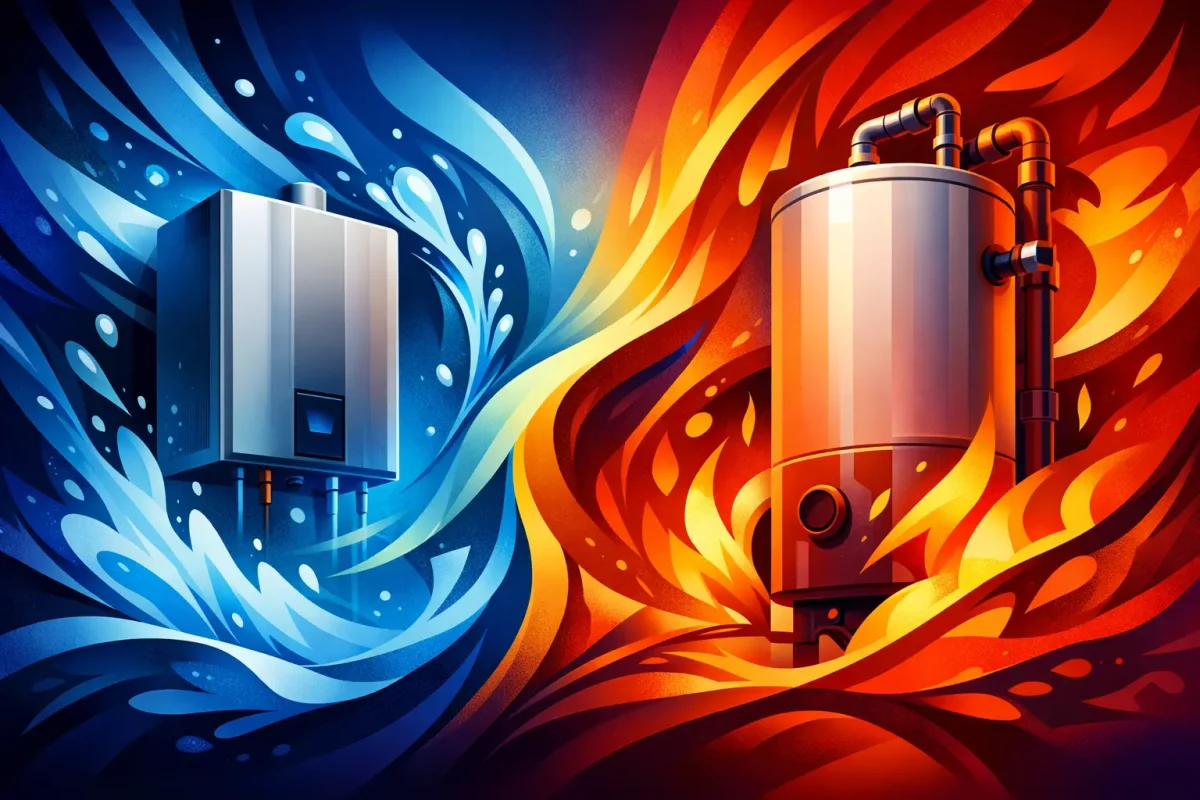
A failing water heater usually stops being an abstract home upgrade question and turns into a same-day decision. If you are weighing tankless versus traditional water heaters, the right choice comes down to your hot water habits, your plumbing setup, your budget, and how long you plan to stay in the property.
In South Florida and Orlando, that decision also has a local angle. Between hard water, humid conditions, busy households, and the need for reliable hot water year-round, what works well in one home may be the wrong fit in the next. There is no one-size-fits-all answer here, but there is a clear way to think through it.
Tankless versus traditional water heaters: the basic difference
A traditional water heater stores and heats a set amount of water in a tank, usually 40 to 80 gallons. When you use hot water, the tank supplies it until that stored volume runs low, then reheats the next batch.
A tankless water heater heats water on demand. Instead of storing hot water, it activates when you turn on a shower, sink, or appliance. That design saves space and avoids standby heat loss, but it also means performance depends heavily on flow rate, sizing, and the condition of your gas line or electrical service.
For some property owners, tankless feels like an obvious upgrade. For others, a traditional tank system is still the smarter and more cost-effective option.
Upfront cost is where the gap shows up first
If your current tank water heater failed and you need hot water back fast, price matters. A traditional replacement is usually less expensive upfront. Installation is often more straightforward because the plumbing, venting, and utility setup may already be in place.
Tankless units typically cost more to buy and install. That higher price is not just about the equipment. Some homes need electrical upgrades, gas line changes, new venting, or plumbing modifications to support proper operation. In older homes, especially ones with aging infrastructure, that added work can push the project cost up quickly.
That does not mean tankless is overpriced. It means the real comparison is not tank versus tankless on paper. It is tank versus tankless in your actual building.
Performance depends on how your household uses hot water
This is where homeowners often make the wrong call. They hear that tankless gives endless hot water and assume it is automatically better.
Endless hot water is a real advantage, but only if the unit is correctly sized for your demand. If several people are showering while the dishwasher and washing machine are running, an undersized tankless unit can struggle to keep up. In larger homes or properties with multiple bathrooms, proper sizing is everything.
A traditional tank heater is simpler in this respect. It gives you a stored reserve of hot water. Once that reserve is gone, recovery time becomes the issue. For a smaller household with predictable usage, that may not be a problem at all.
For a family that regularly staggers showers and appliance use, a tank heater can work just fine. For a home where hot water demand comes in long stretches or at odd times, tankless may be more comfortable and convenient.
Energy efficiency sounds simple, but the savings vary
Tankless systems are generally more energy efficient because they heat water only when needed. Traditional tanks keep water hot all day, whether you are using it or not. That standby heating adds to monthly utility costs.
Still, energy savings are not the same as instant payback. If your current usage is modest, the monthly difference may not be dramatic enough to justify a much higher installation cost right away. If your household uses a lot of hot water, the efficiency benefit becomes more meaningful over time.
Florida homeowners also tend to see a slightly different value equation than homeowners in colder climates. Because incoming water temperatures are often warmer here, water heaters may not work quite as hard year-round. That can narrow the efficiency gap a bit, depending on the system and household demand.
Lifespan and maintenance matter more than most people expect
Tankless water heaters often last longer than traditional tank units. That longer service life is one of their biggest selling points. But longer life does not mean no maintenance.
Tankless systems need regular flushing and descaling, especially in areas with mineral-heavy water. If maintenance gets ignored, performance drops and internal components can wear out faster. Traditional tank heaters also need maintenance, but many owners skip it until there is a leak, rust, or no hot water.
A tank unit is generally simpler to diagnose and replace. A tankless unit is more specialized. When it is installed correctly and serviced on schedule, it can be an excellent long-term system. When it is installed poorly or neglected, it can become an expensive headache.
Space is a real factor in condos, smaller homes, and commercial properties
A tankless unit takes up much less room than a standard tank heater. In tight utility closets, garage conversions, townhomes, condos, and certain commercial spaces, that alone can make tankless appealing.
Traditional tanks need floor space and clearance. If you already have that space and it is not causing any problems, this may not matter. But if every square foot counts, tankless can free up useful room.
For property managers and business owners, that space savings can also help in mechanical rooms where access and layout matter for serviceability.
Reliability during heavy use
A lot of people assume newer always means more reliable. That is not always true.
Traditional tank water heaters are mechanically simple and familiar. Many plumbing systems are already built around them, and replacement is usually straightforward. If you need dependable hot water without changing much else, a tank model is often the low-drama solution.
Tankless systems are reliable when they are correctly matched to the property and professionally installed. But they are less forgiving of poor sizing and improper setup. Venting, gas pressure, electrical capacity, and water quality all matter. That is why professional evaluation matters before making the switch.
If your goal is avoiding surprises, the best option is not the fanciest option. It is the one that fits your household demand and your building conditions.
Which system makes more sense for Florida homes?
In many Florida homes, tankless is a strong fit when the owner wants better efficiency, more usable space, and long showers without running out of hot water. It also makes sense for homeowners planning to stay in the house long enough to benefit from the higher upfront investment.
Traditional tank water heaters still make a lot of sense when budget is the top priority, when replacement needs to happen fast, or when the existing setup supports a simple swap. They are also a solid choice for smaller households or rental properties where cost control and ease of replacement matter.
For commercial properties, the answer depends on use patterns. A restaurant, salon, office building, or multifamily property may need a very different solution than a single-family home. Peak demand, downtime risk, and available utility capacity all affect the right call.
Signs you should replace instead of repair
Whether you choose tankless or traditional, timing matters. If your water heater is older, leaking, producing rusty water, making banging noises, or failing to keep up, replacement may be more practical than another repair.
This is especially true if the unit has become unreliable or inefficient. Paying for repeated service calls on an aging heater often delays the inevitable. In many cases, it is smarter to replace it before a full failure leaves you without hot water at the worst possible time.
The best choice comes down to the property, not the hype
When customers ask about tankless versus traditional water heaters, the honest answer is that both can be the right solution. Tankless is not automatically better, and traditional is not outdated. The better system is the one that matches your demand, your utility setup, your maintenance expectations, and your budget.
That is why a real inspection matters. A good plumber looks at more than the old unit. They look at the number of bathrooms, fixture use, gas or electrical capacity, venting needs, water quality, and whether the installation will truly perform the way you expect. That is how you avoid overspending on the wrong system or undersizing one that cannot keep up.
If you are replacing a failing water heater in South Florida or Orlando, speed matters, but so does getting it right the first time. A fast estimate, honest pricing, and a clear explanation of your options can save you a lot more than a rushed decision ever will.
Hot water should be one less thing to worry about. Choose the system that fits your property now and will still make sense when the next busy morning hits.